

Fort Double Drift
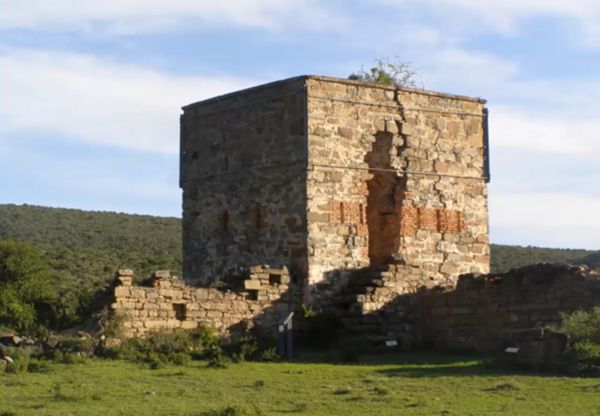
Photo: Pat Irwin
Location
Eastern Cape Parks Great Fish River Nature Reserve,Eastern Cape Province,South Africa
In the Double Drift part of the Nature Reserve, accessible from either Grahamstown via the R67 or Peddie via the R345.
Either option includes gravel roads with stretches requiring caution, especially in a low ground clearance vehicle.
If approaching from Peddie, the state of river crossing at the low water bridge close to the Fort is particularly important.
Pay Eastern Cape Parks entrance fees in cash and sign their indemnity at the Nature Reserve entrance. Requesting guidance from the Parks Staff on the road condition and how to get to the Fort is recommended.
GPS: 33 deg 5 min 24.85 sec S, 26 deg 46 min 31.86 sec E
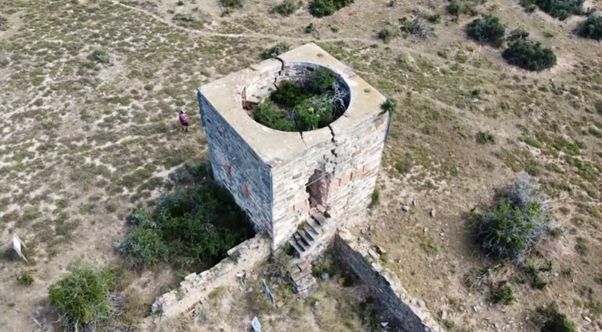
Photo: Michael Newcombe
Significance
At the crossing over the Fish River originally called New Drift, an island divides the river into two channels, forming two drifts. It was on a regular wagon route between Grahamstown and what was called Xhosaland. The name Double Drift was given to the fort built to dominate the crossing in early 1835 during the 6th Frontier War (1834-1836).
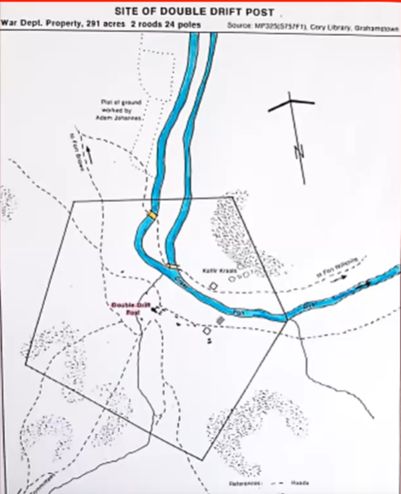
Figure 1: Site of Double Drift Post
Source: Coetzee Colin 1994; Forts of the Eastern Cape: Securing a frontier 1799-1878.
Published privately
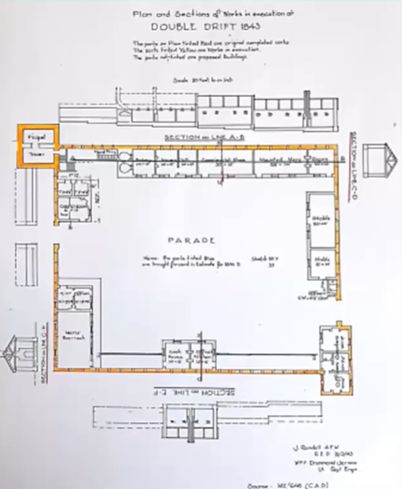
Figure 2: Plan of Fort Double Drift
Source: Coetzee Colin 1994; Forts of the Eastern Cape: Securing a frontier 1799-1878.
Published privately
Figure 2 is the plan of the Fort. This design of piquet tower and parade ground surrounded by buildings and wall was common in the British Empire.
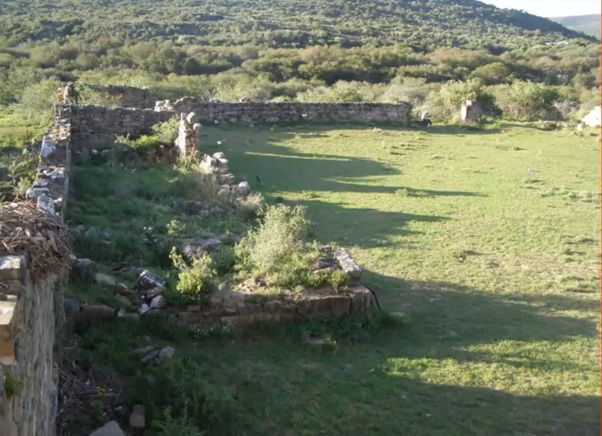
Photo: Pat Irwin
While towers were preferably built of stone, this one is of stone and brick, which makes it weaker, possibly because stone was not readily available. Bricks were also used in the walls and loopholes.
In 1995, metal bands were placed around the tower to hold it together and slow the gradual deterioration of the structure.
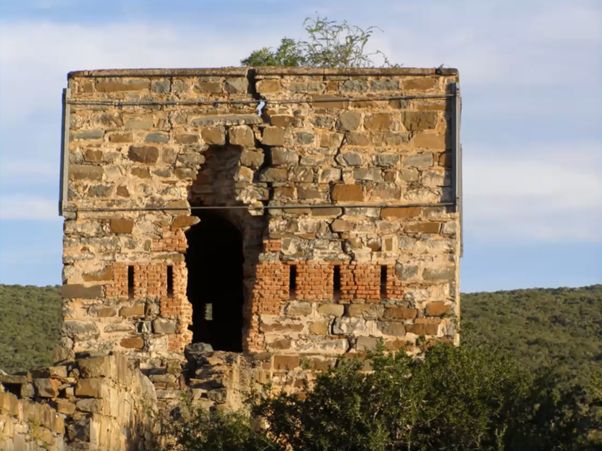
Photo: Pat Irwin
The entrance to the tower was via steps from the courtyard to the first floor. Below the first floor was the gunpowder magazine and a storeroom which could only be reached from the inside. The first floor had loopholes for musketry, with flues through walls to disperse smoke.
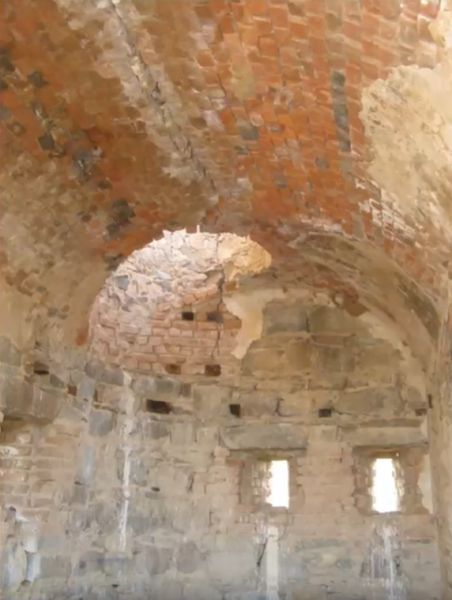
Photo: Pat Irwin
The roof had a gun on a traversing platform and was reached by an internal ladder.
After the 7th and 8th Frontier Wars, as the frontier moved eastwards, Fort Double Drift lost military importance and was transferred to the Colonial Government even before the general abandonment of military posts in 1861.
Further information
Field trip to Fort Brown and Fort Double Drift