
 The South African
The Beginning
Surprisingly, South Africans in general know little of our participation in the Second World War. The Second World War entered my mind when on Sunday, 3rd September, 1939, we were about to sit down to dinner when my parents and sister - eleven years my senior - switched on our Phillips wireless - and became silent, listening to a thin, reedy voice come out of the loudspeaker and my sister irritably said to me "Keep quiet".
The voice was that of Neville Chamberlain, Britain's Prime Minister. He was telling the world that Britain and Germany were at war, because Germany had ignored the British and French demand that she withdraw her armed forces from Poland, invaded at dawn on 1st September.
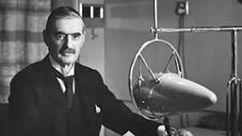
The family remained silent after the broadcast, though my mother voiced her concern about her niece, Hedda-Rita, in Germany.
On the 4th September, the Prime Minister, General J.B.M. Hertzog, proposed to Parliament that the Union of South Africa remain neutral. He argued that Germany was only righting the wrongs of the 1919 Treaty of Versailles. He clearly did not know of the the equally harsh treaties Germany had imposed on France in May, 1871, and on Russia in March, 1918, or of the enormous destruction Germany had wrought in Belgium and France's industrial, agricultural and mining areas and towns from August, 1914 - now being repeated in Poland. He seemed to speak sympathetically of Adolf Hitler, despite the series of broken agreements and aggressive actions by Hitler, Fuehrer of Germany, since the Wehrmacht''s occupation of the de-militarised Rhineland, in March, 1936.(1)
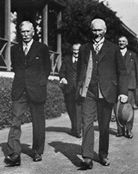
Deputy Premier Jan Smuts, disagreed, declaring that Hitler wanted to dominate the world and would demand the return of former German colonies, including South-West Africa, which the Union administered for the League of Nations. Smuts considered that war against Germany was in the interests of South Africa. He warned that not entering the war with Britain, France and the Commonwealth could lead to a hostile international environment for the Union. Parliament adopted General Smuts's proposal that the Union declare war on Germany by 80 to 67 votes and he became Prime Minister.
At school, after the mid-morning break, our teacher, who hailed from Britain, returned to our classroom in tears. We heard later that she and Dr Kat, the Headmaster, who came from Holland, listened to the radio during break, and had heard of the Wehrmacht's actions in Europe.
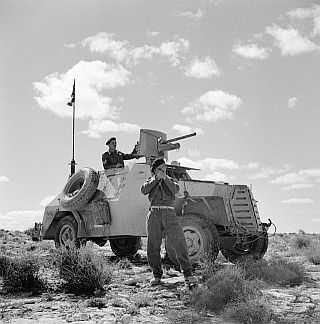
On another day, in 1940, the Headmaster's brother, Lt I.M.L. Kat- Ferreira, arrived at our school in an armoured car. He invited us to look at it and allowed us to climb inside. Years later I discovered that it was a South African made Marmon-Herrington, Mark 1 driving on the rough country roads to assess its endurance. Though its armour-plating was made by Iscor and it was assembled by Dorman Long, the chassis and four-wheel drive were imported from Canada and America.
Its first use was in operations against Italian forces in East Africa. Six Marks were eventually developed. Later in the War, the UDF was able to obtain American Sherman and Stuart tanks for the Italian Campaign(1943-1945).
One afternoon an official envelope, addressed to my father, arrived from the Department of Defence. Puzzled, my Mother opened it and found that my father had secretly volunteered to serve in the Army though he was fifty years old.
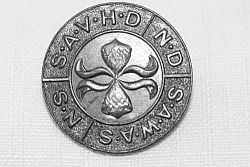
Fortunately, I suppose, he was rejected because of his age, his rank in the Civil Service and the importance to war industries of the Department of Mines, in which he served. He was, however, enrolled as a member of the National Reserve and received a bronze buttonhole badge embossed with the letters 'NS'.(2)
My father did not believe that a Civil Servant should voice political opinions. He only explained his motives to me after he retired and I was a student in 'Political Science' at university and had myself read Mein Kampf, Adolf Hitler's pseudoautobiography, which explained his aims for Eastern Europe. My father was influenced mainly by reading politicians' contradictory speeches.
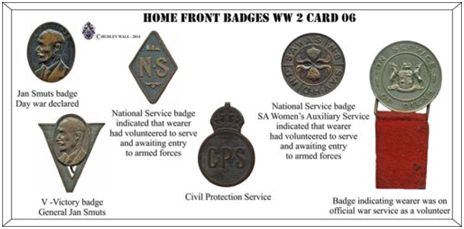
He was persuaded that Smuts had a far better understanding of Adolf Hitler's intentions and conduct than had General Hertzog or Dr D.F. Malan, Leader of the Opposition in 1940. They, like Chamberlain, had readily accepted Hitler's false explanations, excuses and promises.
Gaining Strength
Quite unprepared for war, the Union had sixteen artillery batteries with only eighty-seven field guns, three 3-inch mortars, and eight anti-aircraft guns. Ammunition was very scarce for all artillery, with only 28,941 rounds of field-artillery ammunition - insufficient for more than a few hours' engagement.(3)
The SA Air Force had 173 officers and 1,664 other ranks, and one operational and two training squadrons. On 6th September, 1939, the SAAF’s front-line operational aircraft consisted of four Hurricanes Mk1, a twin-engined Blenheim bomber and a single-engined Fairey Battle bomber, and six obsolete Furies, sixty-three obsolete Hawker Hartbeeste, three DH 66 Hercules, one Gloster AS 31, a few equally obsolete Avro Tutors, Westland Wapitis, Hawker Harts, Envoys and Audaxes.(4)
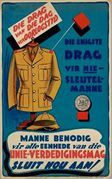
South African soldiers were restricted by the 1912 SA Defence Act as to where they were permitted to serve. Consequently, the government had to rely on volunteers to fight outside South Africa. They were distinguished by an orange tab slipped onto their epaulets.
These tabs only ceased to be used when Gen. Smuts passed away.
In 1939 the Army's 'part-time' Active Citizen Force consisted of only 14,631 soldiers while the professional Permanent Force amounted to merely 3,353. By the end of the War the total of the UDF numbered 406,133 full-time people. They were not only White but also 77,239 Black, and Indian and Coloured servicemen. While 24,975 women served in the Women's Auxiliary Army Services, Women's Auxiliary Air Force, SA Women's Auxiliary Naval Service, and the SA Military Nursing Service, another 63,341 were part-time National Reserve Volunteers.
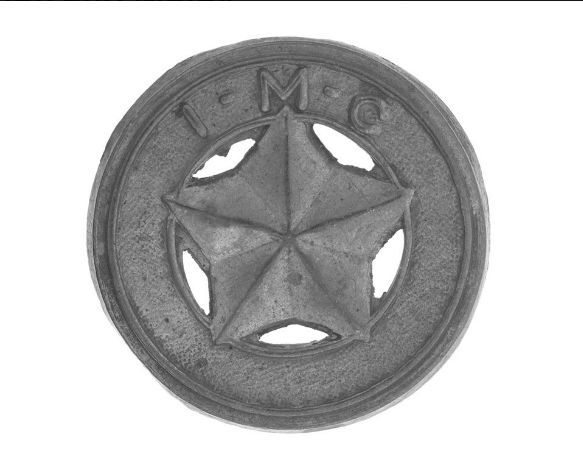
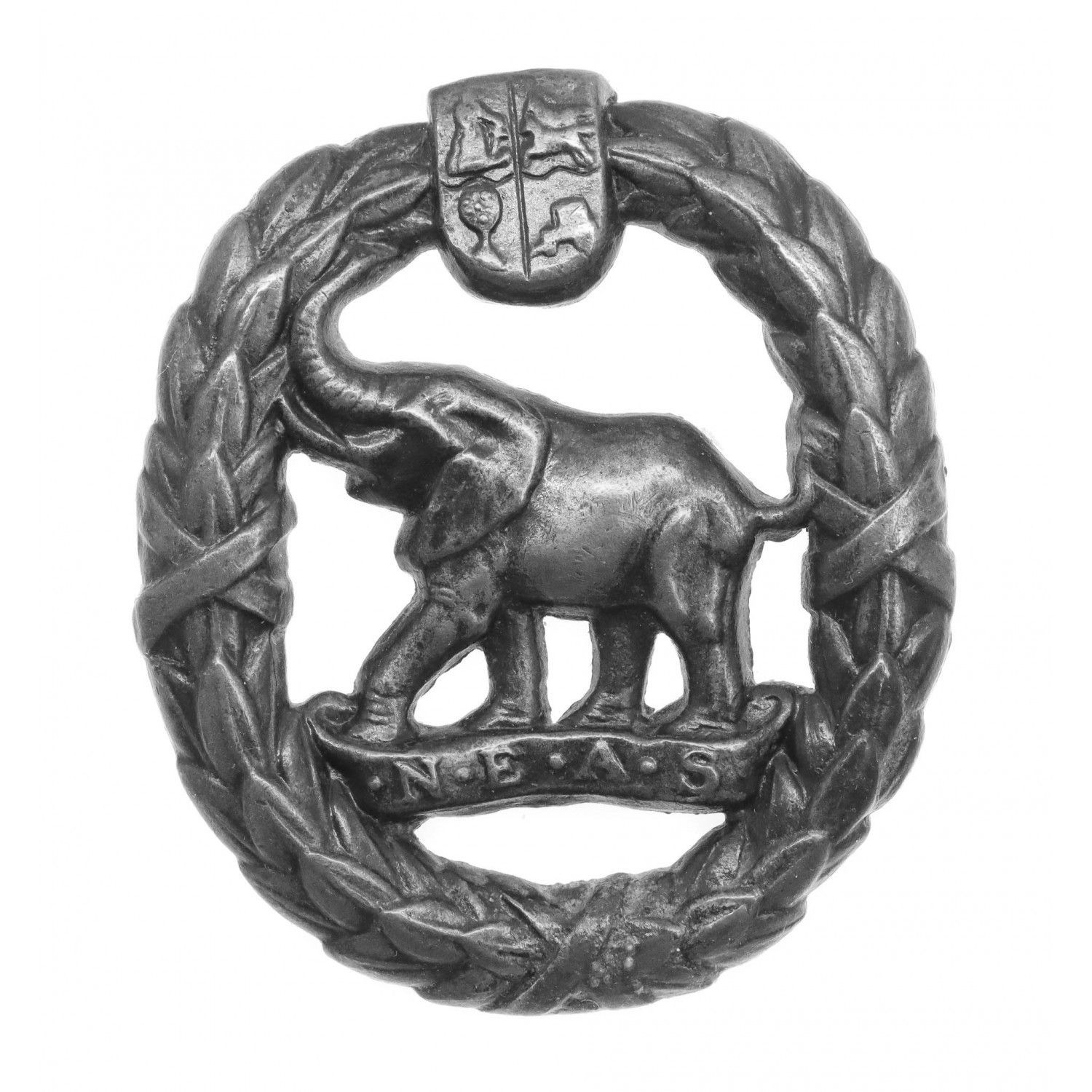
The SA Naval Forces served in 95 armed trawlers and whale catchers used as corvettes and mine sweepers in the South Atlantic, Indian Ocean and the Mediterranean. More than 20,000 SANF officers and ratings were seconded to the Royal Navy for service in the South East Asian Theatre.
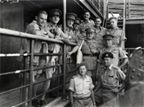
The SA Air Force grew to thirty- five squadrons flying 82,401 operational missions in Abyssinia, the Western Desert, Tunisia, Italy, the Warsaw Uprising, and in maritime sorties.(5)
The Japanese Scare
The rapid conquest of large sectors of South East Asia by Japanese forces in late 1941 aroused concern in the Indian Ocean.
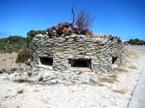
Durban's beaches were defended with barbed wire entanglements. At various points along the coast there were radar stations and concrete 'pillboxes'. They were emplacements with horizontal slits in their walls to allow machine guns to traverse left and right to sweep the beaches with machine-gun fire if Japanese soldiers were to land.
The Union's Coastal Defence Staff was surprised when early in 1942 aircraft from I-10 Yokosuka, a Japanese submarine, reconnoitered at night over Durban, East London, Port Elizabeth and Simonstown. It was realised that a brightly lit city could reveal the silhouettes of ships in convoys moored off shore and blackouts were introduced.(6)
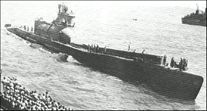
In any case, German, Japanese and Italian submarines sank almost 800,000 tons of shipping within one thousand miles of our coasts.
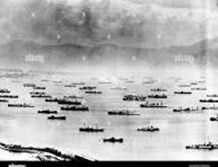
Convoys passing South Africa consisted of merchant ships, sailing in large groups protected by destroyers and frigates. Their cargo included aircraft, tanks, ammunition, fuel, other essential supplies as well as soldiers carried to Egypt, India, or to Britain and the USA and other countries involved in the War.
War Industries
Though she was at war, South Africa could not easily import armaments and other equipment. Seven European countries had been occupied by German forces.
Having depended mainly on a mining and agriculture economy, South Africa now had to develop secondary industries from the ground up to provide armaments . The Prime Minster appointed the brilliant Dr H.J. van der Bijl, founder of Iscor, as Director of War Supplies to answer for the country's military equipment needs.
Within two years new industries were manufacturing artillery (eventually two hundred 3.7-inch howitzers, four hundred anti-tank guns and 3-inch mortars), 32,000 vehicles including 5,746 armoured cars, all calibres of ammunition, as well as optical gun-sights, radios, mine detectors and tyres, shoes and boots.
The Great Depression of 1929. 1938 was drawing to a close and developing war industries helpedspeed up recovery in South Africa.(7)
Britain could not yet supply Radar(RAdio Detection And Ranging) equipment, essential for detecting enemy shipping along our coasts. General Smuts appointed another scientific genius, Professor Basil Schonland, Director of the Bernard Price Institute for Geophysical Research at Witwatersrand University, to develop Radar for the UDF. As early as 16th December, 1939, his team were obtaining signals reflected by the Northcliff water tower. (8)
The Real War
The UDF fought "up North" in Somalia, Abyssinia, Libya and Egypt(1940-1942) capturing General leutnant Artur Schmitt and his Division in Bardia. The 5th SA Infantry Brigade was almost destroyed by the German 15 Panzer and Italian Ariete Divisions in the battle at Sidi Rezegh. The 2nd SA Infantry Division, trapped in Tobruk, surrendered to avoid massacre at the hands of Gen. Erwin Rommel. Losses in the Western Desert included POW, killed, wounded and died of disease. However, in October, 1942, Major General Dan Pienaar's 1st SA Division fought successfully in the second battle of El Alamein.
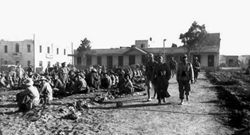
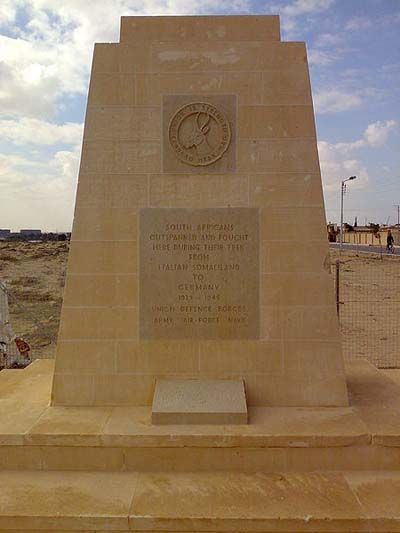
In 1942, General Smuts, concerned at the Japanese presence in the Indian Ocean, sent the 7th SA Infantry Brigade to participate in the Britishcapture of Madagascar.
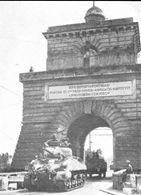
Major General Everard Poole's 6th SA Armoured Division was established to join in the campaign to liberate Italy (1943-1945), fighting from the heel of Italy to the Po Valley.
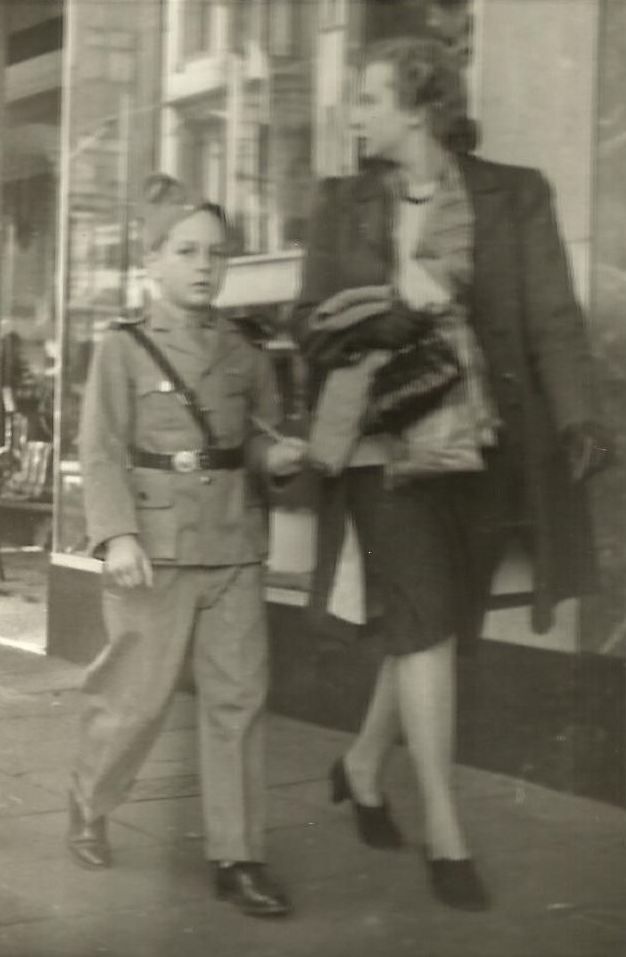
In 1942, many South African parents gave their sons Army uniforms like the little boy in the photo. The author received one on his ninth birthday with a First World War ribbon sewn on to the jacket - causing a lot of mirth to soldiers. He is shown here with his sister in 1942.
Rationing
By September, 1940, some foodstuffs were scarce because of unusually small crop yields. Also, essential foods had to be sent to our armed forces in East and North Africa and also for sale in Britain.
Rationing was inevitable, though never as drastic as in Britain where rationing began as soon as the War began. Large quantities of canned vegetables, fruit, meat and jam, as well as rock-hard army biscuits called 'hardtack', were produced for Allied forces in the various operational theatres of war.(9)
The War Measures Act, 1940, enabled the government to control supplies and prices, and to prevent hoarding and profiteering from scarce essential goods.
Ships bringing fuel and armaments to South Africa were targets for enemy raiders - disguised merchant vessels armed with 15-cm (5.9inch) guns and torpedo launchers - and for submarines. The cruiser Admiral Graf Spee won infamy in the South Atlantic but was scuttled off Uruguay after severe damage when attacked by three British cruisers. To lessen dependance on imported fuel, petrol coupons were issued to limit its use.(10)
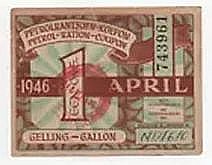
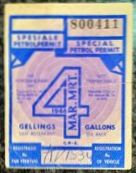
There were two commodities available in the Union, to ease petrol shortages.(11)
One, called 'Satmar', was made using torbanite, an oil shale, used to manufacture petrol selling for 20% of the ordinary petrol price. Torbanite was found near Ermelo and in 1934 the South African Torbanite Mining and Refining Company to produce petrol was established.
The other local fuel, called 'Union' was a motor spirit, made as far back as 1917, by Natal Cane By-Products Ltd. Sugar cane ethanol was a fuel produced by the fermenting of sugarcane extract.
South Africans were not very disciplined about rationing or saving scarce resources. For some this was a political gesture. It was also because we were far from war theatres and did not realise how seriously rationing was needed.
From being a grain exporter South Africa had to import maize and wheat from Argentina and Australia. These were rationed in 1941-42 because of unseasonal rains in the Cape and droughts elsewhere. The arrival of 67,000 Italian prisoners of war as well as Allied shipping in our ports raised the demand for foodstuffs.(12)
In 1942, regulations were published, ordering that only unsifted flour could be produced and sold. However, people made sieves which provided white flour for white bread and cake.
Further, bread was not to be delivered on Wednesdays, and the public was also required not to eat meat on Wednesdays, - but many ignored these rules.
To save paper and to publicize the UDF, the Postmaster-General introduced miniature stamps - nicknamed 'Bantams'. Some of the designs were paintings by Neville Lewis, an official War Artist, who served with SA forces in various theatres of War. The stamps are shown in colour on the inside cover of this issue.
They were half to one-third the size of normal postage stamps.
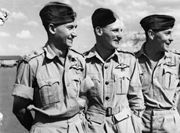
The pilot depicted on the 1½d stamp is Lieutenant Bob Kershaw, who earned the DSO (Distinguished Service Order) for courageously rescuing Capt Jack Frost who had crash landed in enemy-held territory in Abyssinia.(13)
Fresh Excitement
In 1940 my father was transferred to Lichtenburg in Western Transvaal. Convoys of three-ton lorries often passed through the town. If they passed down the main street during our school.s morning break, we rushed to the fence to stare. Often, the soldiers flung rock hard 'army' biscuits at us - and we kept them as souvenirs.
Polly, General Koos de la Rey's daughter, lived on the General's farmoutside the town. She was Honorary Colonel of Regiment de la Rey, often wearing uniform. She used to feed the passing soldiers if they stopped in the town overnight. My mother served in the SA Women's Auxiliary Service, a part-time unit intended to help maintain servicemen's morale, feed them and care for their families. So Mom joined in to help feed the soldiers. My father lent a hand and I would be taken along. It was a thrill to be among all the uniformed men.
One morning the school Principal gathered us together in front of the school to tell us that a former pupil, Salman Datt, had been killed in action. We stood for some minutes silently with our heads bowed. Salman's name appears on a memorial at the War Museum in Johannesburg.
Real Excitement
My father's next transfer, in 1942, was to the Mines Department's office in Pietersburg, a 40,000 square-mile mining area. It opened a new door to thrills. About three kilometres out of town was 26th Air School. Run by the SAAF and the Royal Air Force jointly, it was commanded by Colonel H.J. Marttin, CBE, DFC. Here British, South African and some European men - such as Yugoslav Prince Alexander - were trained to fly on Oxford Airspeed AS aircraft. They flew overhead, all painted yellow, every day. Uniformed men were seen everywhere. Surprisingly, Italian Prisoners of War also roamed the town, clad in a grey uniform.(14) Only the dyed-in-the-wool Fascist soldiers were confined in a segregated block in the Zonderwater POW camp, near Cullinan.
Many Italians worked and lived on nearby farms. Though they were forbidden to enter bars and cinemas, no one stopped them - not even the patrolling Military Policemen. Traces of work they did then may still be seen on some farms and elsewhere in South Africa - such as Tom Jenkins Drive in Rietfontein, Pretoria. Many remained in the Union after the War.
Unprepared for POWs, the administration of POW camps was at first disastrous. After the initial blunders, Colonel H.F. Prinsloo was sent to command Zonderwater camp. He combined discipline with sincere sympathy for the men. To keep them beneficially occupied he helped them to organise an orchestra, a library, craft exhibitions and to have art classes and sports and educational facilities - enabling 4,000 to learn to read. He encouraged them to work in various occupations. His devotion to duty earned him the OBE (Officer of the Order of the British Empire decoration). The Italian government awarded him the Order of the Star of Italian Solidarity and the Pope awarded him the Ordine di Bene Merente.
In the First World War he had earned the French Croix de Guerre.
Wartime Films and Music
The bioscopes - as we called cinemas - made us aware of the War. Local newsreels were African Mirror and Nuus van Orals. British newsreels - Movietone and Pathé showed events in Poland, France, Britain, and in North Italy and South Africa. Eventually, the British and American landings on the shores of Normandy were shown.
Feature films portrayed wartime events such as U-Boat 29, with Conrad Veidt as a U-Boat captain sent on an intelligence gathering mission to Scapa Flow where the British fleet was moored.
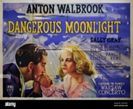
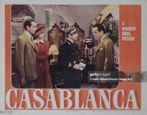
Typical Movie posters
Other memorable films were Dangerous Moonlight with "The Warsaw Concerto" as the theme music, "Strike at Dawn", "Casablanca", "Commandos", "The Lion has Wings" and Leslie Howard's classic "The 49th Parallel". Charlie Chaplin's "The Great Dictator" ridiculed Hitler. "Stage Door Canteen", about American servicemen being entertained, featured 82 performers - actors, musicians and comedians.
In 1943 I learnt to listen to the BBC, which gave me access to many events - accounts of D-Day landings and Richard Dimbleby's description of the horrors of Belsen concentration camp where more than 38,000 people were murdered. Strangely, when members of the Opposition in Parliament were offered a trip to visit the camps, they declined to go.
The BBC was an education, enabling me to listen to a wide range of events, discussions and radio drama.
Often films and music were meant to build morale or promote propaganda.
Popular music included 'So Long Sarie', 'My Sarie Marais', 'Colonel Bogey', 'The Warsaw Concerto', Glenn Miller's 'In the Mood', the Andrews Sisters' songs, including 'Boogie Woogie Bugle Boy', Vera Lynn's 'We'll Meet Again' and 'I'll Be Seeing You', Gracie Fields's 'Wish me Luck as You Wave Me Goodbye', and 'When The Lights Go On Again(All over the World)', and of course, the German soldiers' song 'Lili Marlene', taken over by the soldiers in the desert war.
There were also comic songs like 'Kiss Me Goodnight, Sergeant Major,' 'Run, Rabbit,' 'We’re Going to Hang Out the Washing on the Siegfried Line,' 'This is the Army, Mr Jones', 'Bless 'em All,' and 'The Quartermaster 's Stores'' Even songs from the First World War -'Keep the Home Fires Burning' and 'It's a Long Way to Tipperary'.
The famous actor Noel Coward visited South Africa in 1944 at the suggestion of 'Ouma Smuts, the Prime Minister's wife, to benefit her war charities. Coward performed for the UDF Entertainment Unit and then toured the Union. His play Blithe Spirit was performed at the Opera House in Pretoria in July. The HNP(ultra-nationalist party's) MP, Paul Sauer, made unfriendly remarks about the actor-playwright's visit saying "Have we lost our balance that we make heroes of actors and music-hall luminaries at the state's expense?"
Countering German Propaganda
From 1940, Dr Ernst Malherbe, a renowned academic, was Director of Military Intelligence. Some academics motivated the setting up, under him, of a group of information officers to explain to the armed forces why South Africa was at war. They were important in rebutting the broadcasts from Radio Zeesen in Germany and propagandists in the Union.
Liberty Cavalcade and the Steel Commando
Rebutting the Zeesen broadcasts, encouraging recruiting, raising funds, and building morale were all very necessary. Malherbe's team organised military exhibitions called the Steel Commando, the Air Commando and the War Train to visit towns.
The Steel Commando travelled in military vehicles, including one fitted out as a recruiting office. The SAAF's Air Commando demonstrated flying and aerobatics, and dropped recruiting pamphlets. The Commando exhibited arms, uniforms and equipment and performed military demonstrations. In some towns, mounted Oudstryders of the Boer commandos of 1899-1902, escorted the Steel Commando.
The mobile exhibitions served the purpose of bringing the public closer to South Africa’s servicemen and to generate a sense of national pride.
In Lichtenburg a retreat parade was held with the salute taken by Col. G.J. Greeff, a veteran of the Anglo- Boer War and of the Great War. He was accompanied by the Honorary Colonel of Regiment de la Rey, Col J. E. (Pollie) de la Rey-Morkel.
The Liberty Cavalcade was an immense exhibition, arranged by Johannesburg City Council at Zoo Lake in May 1942. It was to raise funds for various wartime needs, such as the National War Fund, and to attract recruits to the UDF.(15) It included military and cultural exhibits illustrating the Union and Allied countries as well as and amusement park entertainments, and drew fifty thousand visitors.
Its success prompted Cavalcade exhibitions to be held in Port Elizabeth in 1943, Cape Town, Durban and Pietermaritzburg in 1944.
The War Train was an SA Railways and Harbours version of the Steel Commando. It carried a variety of SA-made armaments and resembled the armoured trains the UDF possessed before the War - armoured wagons armed with artillery and machine guns.
Military Hospitals
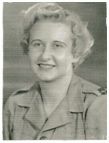
After graduating from college, my sister Marie and several of her classmates enlisted in the SA Medical Corps as dieticians. They served in numerous military hospitals established in South Africa.
Marie was sent to Springfield Military Hospital, in Durban. The Allies' ships risked attacks by enemy aircraft in the Mediterranean. Thus, ships carrying wounded and sick soldiers from the Middle East and Asian theatres took the Cape route to reach Britain, the USA and even Australia. When we visited Marie, the hospital was treating many soldiers intransit. Several other hospitals - the 'Oribi' in Pietermaritzburg, and 'Baragwanath' in Johannesburg were used for Commonwealth and Allied soldiers, sailors and airmen.
The End of the War in Europe
The Western Allies' landing on the Normandy beaches on 6th June, 1944, and the Russian forces advancing from the east, sealed the Wehrmacht's fate. From January, 1945, it was clear that Germany would soon be defeated.
Thousands of Germans, military and civilian, fled westward fearing capture and retribution by the Soviet army. They were quite unexpected and the western Allies forces did not have enough food, warm clothing, other essential supplies, or shelter to cope with them. Inevitably many Germans died of hunger and disease.
Neo-Nazis, continually, and quite falsely, claim that Allied Supreme Commander Europe, General Dwight D. Eisenhower, deliberately refused to provide the necessities of life. Ultimately, on 30th April, with Russian soldiers only a few streets away from his bunker, deep beneath the ruined Reich Chancellery in devastated Berlin, Hitler shot himself. Seven days later his successor, Grand Admiral Doenitz, surrendered, ending the rule of Germany by a murderous criminal gang that had defrauded, plundered and intimidated the German nation and Europe.(16)
Another speech on the radio announced the end of the War in Europe. It was given by British Prime Minister, Winston Churchill. He had relied on words to provide powerful leadership from May, 1940. Ignoring the appeasers, he had warned against Hitler's ambitions since 1933, only for Chamberlain to write "The real danger to this country is Winston. He is the warmonger, not Hitler." But Chamberlain was wrong and Churchill was decisively right.
Hitler had demonstrated the danger he represented by sending the Wehrmacht into the Rhineland in 1936, annexing Austria and invading Czechoslovakia in 1938, and by invading Poland on 1st September, 1939. Churchill's determination and inspiring speeches ultimately led the Commonwealth and the Allies to victory.
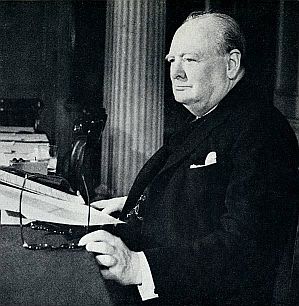
At 3 p.m. on 8th May, 1945, Churchill, spoke. This time we were not crouched before the wireless but standing in a crowd in front of the Pietersburg Town Hall where loudspeakers enabled all to hear his announcement, broadcast by the BBC.
"Yesterday morning at 2:41 a.m. at Headquarters, General Jodl, the representative of the German High Command, and Grand Admiral Doenitz, the designated head of the German State, signed the act of unconditional surrender of all German land, sea, and air forces in Europe to the Allied Expeditionary Force, and simultaneously to the Soviet High Command... Hostilities will end officially at one minute after midnight tonight(Tuesday, May 8), but in the interests of saving lives the 'Cease fire' began yesterday to be sounded all along the front, and our dear Channel Islands are also to be freed to-day. The German war is therefore at an end."
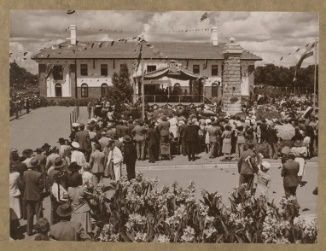
Though for South Africans the war against Germany had also ended, when the Government asked for men to fight against Japan, 23,000 South Africans volunteered.
But after atomic bombs were detonated over Hiroshima and Nagasaki that war also ended.
A Personal Postscript
My mother's German niece, Hedda-Rita, about whom she had worried, her husband Eugen and their three daughters, survived the War. A school teacher, Eugen was conscripted and sent to fight in Russia. When his unit went on home leave their train broke down in Poland. Wandering around, the soldiers came across a concentration camp. When he arrived home in Berlin, the first thing Eugen said, Hedda told me, was "Mein Gott, Hedda, ich habe gesehen, was wirden Juden antun". ("My God, Hedda, I have seen what we are doing to the Jews".)
While on leave he was twice ordered to divorce Hedda, who was half-Jewish. He refused - knowing what her and their three daughters' fate would be. Arrested, he was tried by a Court Martial to whom he repeated his refusal. He was sentenced to be dishonourably discharged from the Wehrmacht for 'disgraceful conduct'. But he and his family survived - even in Hitler's shattered 1,000 year Reich.
End notes.
1 Hancock W.K. Smuts, Fields of Force, 1919-1950, Cambridge University Press, 1968, p.321.
2 Section 21 SA Defence Act 1912, provided that men not trained or serving in the UDF could be posted to the National Reserve for service in case of war.
3 Martin, H.J. and Orpen, N.D. South Africa at War, Military and Industrial Organization, Purnell, Cape Town, 1979, p312.
4 Wessels, A. 'The first two years of war', Military History Journal, 11:5, June 2000, passim.
5 Bisset, W.M. 'South Africa And The War Against Japan 1941-1945',Scientia Militaria, 25:2, 1995.
6 'Submarine aircraft carrier', Wikipedia.
7 During the Great Depression, Hertzog refused to leave the gold standard and devalue currency. Export goods thus increased in cost. When his policy changed in 1932, economic growth began. War industries led to 60% more employment than before. Public Broadcasting Service,Arlington, Virginia. https://www.pbs.org/wgbh/commandingheights/lo/ countries/za/za_economic.html
8 Record of the Organisation of the Director-General of War Supplies, LS Gary, Johannesburg, pp.52-64.
9 Albertyn, Y. Upsetting the Applecart: Government and Food Control in the Union of South Africa during World War II, 1939-1948, M.A., Stellenbosch University, 2014,passim.
10 Immelman, R.F. 'Rationing during World War II', UCT Libraries: Special Collections.
11 Hilsenrath , P. 'The Development of Synthetic Fuels in South Africa', Journal of Energy and Development, 14:,2,1989, pp.269-283, passim.
13 Bridges, E. '1942-44 Bantam Warissue' https://www.southafricacollector.com/ Collect_Southern_Africa13_1942_44_ Bantam_Wars.ht, (Retrieved 15th January, 2025).
14 Ball, J.A. 'Italian Prisoners of War in South Africa 1941-1947' SA Military History Journal,1:1, December 1967
15 The Governor-General's National War Fund was to help families of men and women on active service and returned soldiers after the War.
16 Höhne, Heinz Der Orden unter dem Totenkopf, Sigbert Mohn Verlag, Guetersloh, 1967, Ch. 6.
About the Author
Deon, while still a Major, contributed an article about the SA Corps of Marines to the first issue of the Military History Journal in December 1967. He edited an article about operation Rose - the WWII amphibious landing in Madagascar -in the June 1971 Journal.
A long gap followed until December 2010 when his speech as a Professor at the unveiling of dual memorials to both sides (Boer and Brit) at Surprise Hill, part of the Siege of Ladysmith in the Anglo-Boer War, was reported in the Journal.
Deon proposed the toast to the Society in October 2016 on its 50th anniversary.
The June 2022 Journal contained his explanation of Job Masego's MM award while the December 2024 issue told of his father's Boer War memories.
He served in the Citizen Force from 1950, retiring as a Brigadier- General in 2007. He was a Professor at UNISA from 1968 to 1997.
Return to Journal Index OR Society's Home page
South African Military History Society / scribe@samilitaryhistory.org