
 The South African
Plus the Names on the Memorial Wall
In May 2024 the author had the honour of completing part of his teaching practical at Grey High School. Every day, walking past the World War memorial in the Memorial Quad he wondered who those names belonged to. Who were they? What part did they play in the wars?
His subsequent research found the stories of almost every single name carved into the memorial, resulting in this article.
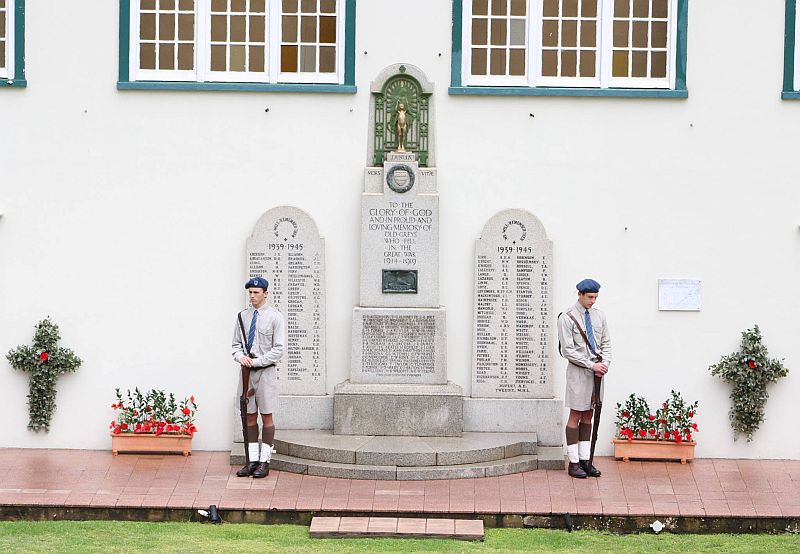
These young men, shaped by the values and education of Grey High, went on to distinguish themselves on various battlefields across Europe, Africa, and ocean. From the muddy trenches of the Somme to the skies over North Africa, their stories are ones of courage, sacrifice, and a profound sense of duty. This article delves into the lives of some of the Grey High boys who, driven by honour and the spirit of adventure, embarked on journeys that would see them make the ultimate sacrifice. Their memories are etched not only in the annals of history but also in the hearts of their school, and the larger military community, serving as enduring reminders of the high cost of war and the bravery of those who fought in it.
Captain Edwin Arthur Cochrane excelled both academically and athletically while attending Grey High. After completing his education, he joined a Johannesburg Mining Management initiative that aimed to employ educated young men in practical goldmining. Along with eighty other volunteers, Cochrane moved to the Rand. Although the project ultimately did not achieve its goals, the experience proved valuable for those involved. Cochrane, however, harboured a deep passion for farming.
A significant milestone in his life was when he partnered with B.K. Mayo, who had recently established a farm called "Sunnyside" in Thornhill. During this time, Cochrane joined the Southern Rifles and participated in the South West African campaign.
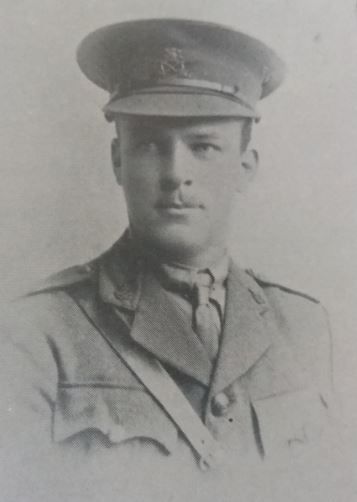
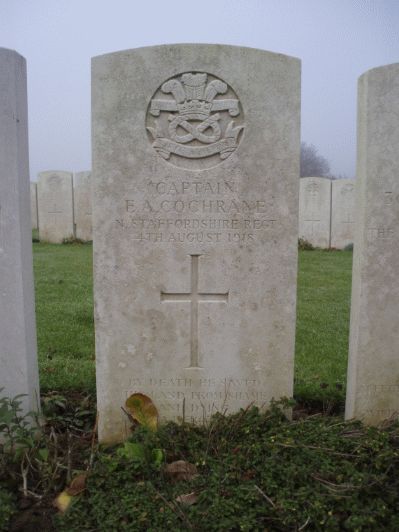
Cochrane and his friend, St John Matthews, later travelled to England, where they secured commissions in the 4th Staffordshire Regiment. Matthews was deployed to France and tragically killed shortly thereafter. Cochrane, meanwhile, remained in England for over a year, training and instructing troops. His competence as an officer earned him a promotion to Captain, and he was eventually deployed to France. Tragically, like many of South Africa's promising young men, Capt. Cochrane succumbed to his wounds received in battle on August 4, 1918, and was laid to rest in Pernes British Cemetery in Pas de Calais.
Second Lt Ray Tardugno was a gifted musician, proficient in both wind and stringed instruments, following in the footsteps of his father. Before the war, Ray lived in Cape Town, where he joined the Naval Volunteers Cadet Corps. In 1915, driven by a sense of duty, he travelled to England to join the fight against Germany. During his voyage, he discovered that his friend, Second Lt Harold P. Almon, was also aboard the same ship. Upon reaching England, Ray sought a recommendation for a commission from the Precentor at St Mary's in Port Elizabeth and began training with the Artist's Rifles Corps while awaiting a response.
However, due to an outbreak of measles, the Corps was transferred to France before the recommendation could be acted upon. Despite this setback, Ray managed to secure a commission in the Royal Welsh Fusiliers.
One of Ray's duties included serving as part of the Royal Guard during King George V’s visit to the British lines. Eventually, Ray transitioned to the Air Service, becoming an observer attached to the 57th Squadron of the Royal Flying Corps within the 17th Royal Welsh Regiment. On the evening before his death, 6 July 1917, Ray seemed to sense an impending tragedy, meticulously organising his papers and ensuring his home address was easily accessible. Before embarking on his final flight, he confided in a friend, expressing a sense of foreboding, saying, "I wish I was not going up today."
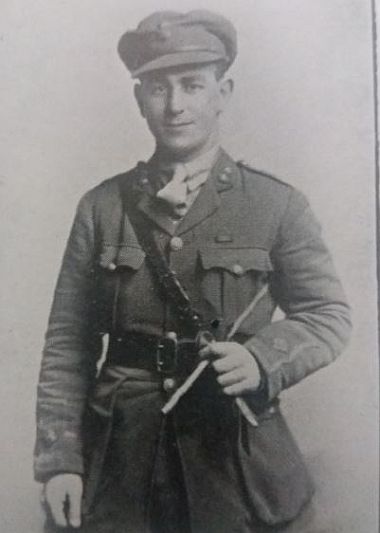
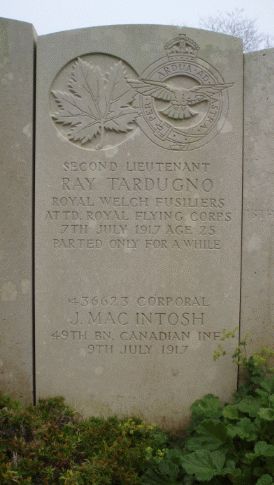
The aircraft, a DH4 with registration number A7415, piloted by Second Lieutenant Green, reportedly struck a pole on takeoff, damaging the rudder and causing the plane to lose control. The plane then executed a series of erratic manoeuvres before crashing, resulting in the deaths of both Ray and the pilot. Conflicting accounts in Royal Flying Corps records describe the incident as either a "prop hit ground, side-slipped, nosedived, and caught fire on takeoff for photo reconnaissance" or as a "flying accident on a practice flight." Interestingly, Ray had been involved in a previous, non-fatal accident on 8 June 1917, also in a DH4, but with a different registration number, A7422, and the same pilot, Second Lieutenant JHS Green. The plane was "wrecked on landing from practice," although it is unclear whether either officer was injured in this earlier incident.
While educated at Grey High School in Port Elizabeth Wing Commander Grahame Lawrence Cruickshanks distinguished himself in both cricket and football. As an opening batsman and wicket-keeper for the First XI cricket team, he showcased his athletic talent, which later extended to his career in aviation.
Before his military service, Cruickshanks worked for Shell South Africa, but his ambitions led him to England in 1933 to join the Royal Air Force. After completing his training in Egypt, he was assigned to No. 14 Squadron in Transjordan, where he quickly earned a reputation as a skilled and resourceful pilot. His prowess was further recognized when he qualified as an instructor in England in 1938.
In addition to his military career, Cruickshanks was also a notable sportsman. He played first-class cricket for Eastern Province as a left-handed batsman and occasional wicket-keeper and even represented the Egypt national cricket team in five matches during the mid-1930s.
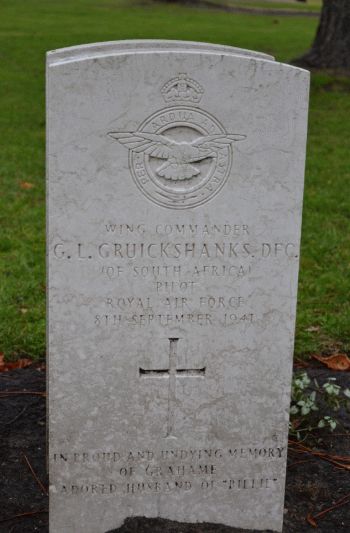
Cruickshanks was a pilot in the 214 Royal Air Force Squadron at the time of his death, and was killed in action on 8 September 1941, age 28. He flew the Wellington R1784 BU, during [a] bombing mission on Berlin and was lost over Germany. He was awarded the Distinguished Flying Cross, as noted in the London Gazette on 28 July 1942. Wing Commander Cruickshanks' legacy is honoured at the Berlin 1939-1945 War Cemetery in Germany, where he is buried.
Sergeant Kenneth Esler Hall was not only a committed soldier but also a remarkable athlete. He was the South African half-mile champion and proudly represented South Africa in the USA during the 1930s.
Before his military service, Hall worked for the Mobil Oil Company in Cape Town. Initially transferred to Rhodesia as a temporary relief, he decided to remain there, eventually joining the RAF 44 (Rhodesia) Squadron. On 17 December 1941, at the age of 31, Hall tragically lost his life when his Hampden Mk. I AD868 went missing over the sea off the French coast during a bombing mission aimed at destroying the German battleship, the Schärnhorst, stationed in Brest.
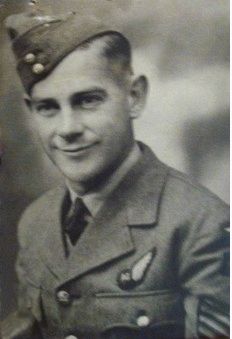
The circumstances surrounding Hall's disappearance remain a mystery,but an unknown airman, found on 22 December 1941 and buried in the Camaret-sur-Mer Communal Cemetery alongside Sergeant Kaschula, who was on the same flight, may potentially be Hall. There is a one in three chance that this airman is Hall, but without definitive proof, his name remains inscribed on the Runnymede Memorial in the UK, honouring his sacrifice.
Third Engineer Officer Charles Henry Hicks served aboard the S.S. Clan MacTavish (Glasgow) during World War II. On 8 October 1942, at the age of 30, Hicks met his untimely death when the ship was torpedoed by U-159, approximately 100 miles west-southwest of Cape Town, while en route to Beira and Durban from Trinidad and New York. The S.S. Clan MacTavish had just rescued 35 survivors from the Boringia, which had been sunk by the same U-boat only hours earlier. However, at 09:07, a torpedo struck theport side of the S.S. Clan MacTavish, causing the vessel to sink rapidly by the bow within minutes, leaving the crew with no time to launch lifeboats.
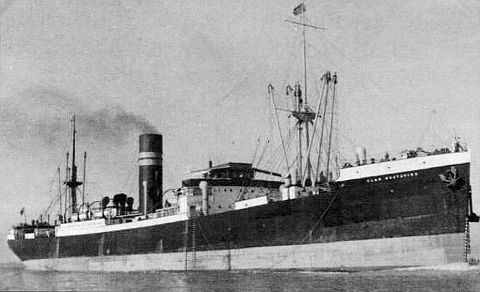
The sinking of the Clan MacTavish was a devastating loss. Of the 61 crew members, two gunners, and seven survivors from the Boringia on board, Hicks and 60 others perished. A few survivors managed to right two capsized lifeboats and cling to wreckage until they were eventually rescued. The U-boat, U-159, resurfaced at 09:45 to question the survivors but had to dive again due to the approach of an aircraft, which then directed the British steam merchant Matheran to the lifeboats.
The Matheran rescued 36 crew members, 3 gunners, and 28 survivors, landing them safely at Cape Town on 9October.
Hicks’ sacrifice is commemorated on the Tower Hill Memorial in the UK, and he is also honoured with a commemorative stone in South End Cemetery, Port Elizabeth. His loss, like that of many others during the war, serves as a poignant reminder of the dangers faced by merchant seamen during World War II and the perilous conditions under which they served.
Lieutenant Abraham Max Lazarus served in the South African Artillery and was later seconded to the 6110 Medium Battery of the 3rd Medium Regiment, Royal Artillery. Born in 1918, Lazarus’s academic brilliance and passion for sports marked his early years. He attended Grey High School in 1929, where he excelled academically, receiving the prestigious Gold Medal in 1933 for his outstanding performance in the Departmental Senior Certificate Examination. His academic achievements earned him a three-year scholarship to Rhodes University College, where he continued to distinguish himself both in the classroom and on the sports field.
Lazarus earned a Bachelor of Arts degree, followed by a Master of Arts degree and a University Education Diploma with honours. His academic prowess was further recognized when he was offered a scholarship to pursue a Doctor of Divinity degree at the Jewish College in London, an opportunity he was unable to accept.
In 1939, Lazarus began his careeras an educator, taking up a position as an English and Latin master at Vryburg High School. His enthusiasm for sport, particularly rugby and tennis, quickly became apparent, and he became an integral part of the school community. However, with the outbreak of World War II, Lazarus felt the call to serve and joined the South African Artillery in 1941. After completing his officer training at Potchefstroom, he was deployed to the Middle East with the 6th Armoured Division.
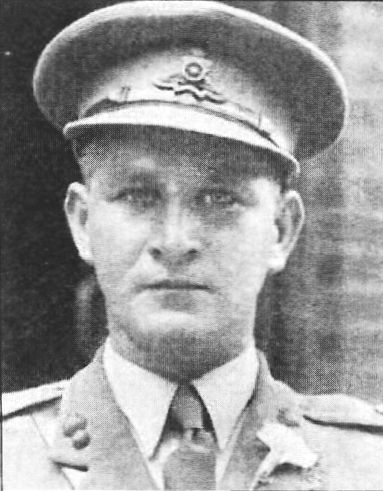
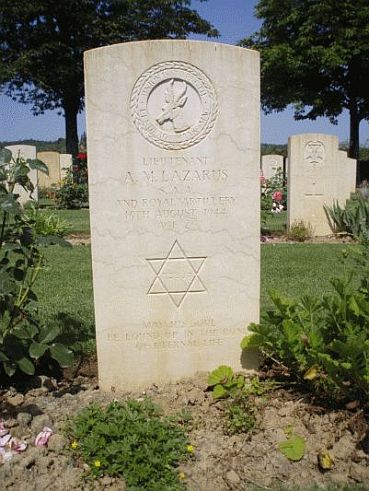
In 1943, Lazarus was seconded to the Royal Artillery’s 3/10 Medium Battery and was subsequently deployed to Italy. His service in the Italian campaign was marked by dedication and courage. During the intense fighting inthe Arno Valley, the jeep in which Lazarus was traveling struck a mine on 13 October 1944, resulting in fatal injuries. At just 26 years old, Lazarus’s life was tragically cut short.
The official history of the 3rd Medium Regiment pays tribute to Lazarus, noting that he was a "first-class Troop Officer" who was highly regarded by his comrades. His loss was keenly felt by those who served alongside him. Lazarus is buried in the Arezzo War Cemetery in Italy.
Corporal Charles James Walton was known in Port Elizabeth for his active role in the community. He had been a chorister at St. Mary's and was widely recognized as a dedicated sportsman. He served as the secretary of both the Eastern Province Swimming Association and the Royal LifeSaving Association, roles that reflected his commitment to his community and passion for sports. His cheerful disposition and dedication to service endeared him to many. He was reported missing in action on October 18, 1916, at the age of 30, during a fierce and chaotic engagement near the Butte de Warlencourt, a heavily fortified German position on the Western Front. As part of B Company of the 1st South African Infantry Regiment, Walton was involved in a nighttime assault on German trenches, part of a larger attack launched at 3:40 a.m. by three companies of the regiment. The objective was to capture Snag and Tail Trenches, but in the fog of war, B Company overshot Snag Trench, failing to realize they had reached their target. Pushing forward beyond their objective and losing contact with their flanking units, only a few men managed to make it back to safety.
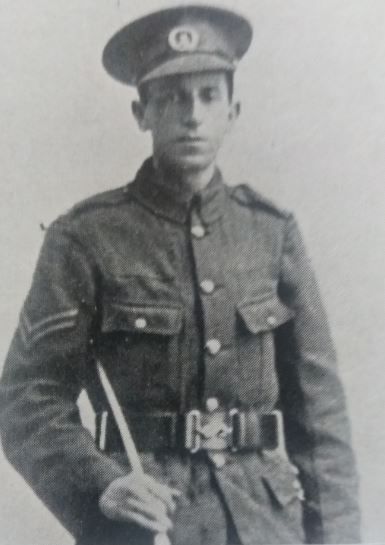
The confusion and miscommunication left B Company isolated, vulnerable to German counter-attacks and heavy machine-gun fire from the Butte de Warlencourt. Later in the day, D Company launched another attack andsucceeded in capturing Snag Trench, but the intense German machine-gun fire took a heavy toll, leaving only a small group holding the position. It was in this desperate and confusing struggle that Walton, along with the rest of his platoon, was lost. Following a night of chaos and relentless combat, he was declared missing, presumed dead. Cpl Walton’s sacrifice is commemorated on the Thiepval Memorial in France, which honours the thousands of soldiers who died on the Somme with no known grave.
Private Harold Barber Wright was a member of B Company, 1st South African Infantry Regiment. Described as a bright and cheerful lad with a promising future in commerce, Wright’s youthful enthusiasm and sense of duty led him to enlist without hesitation when World War I broke out. He left behind his studies and a prospective career to join the fight on the Western Front, where he quickly encountered the brutal reality of war.
During the intense battles on the Somme, Wright was caught in the ferocious fighting that defined the front lines, enduring the mud, shellfire, and constant threat of death that came with trench warfare. Despite his youth and inexperience, he showed courage and determination under fire. Unfortunately, during a fierce engagement, Wright was severely wounded. Notwithstanding medical efforts, on 18 July 1916 and at the young age of 18, he succumbed to his injuries. He was laid to rest in La Neuville British Cemetery in Corbie, France.
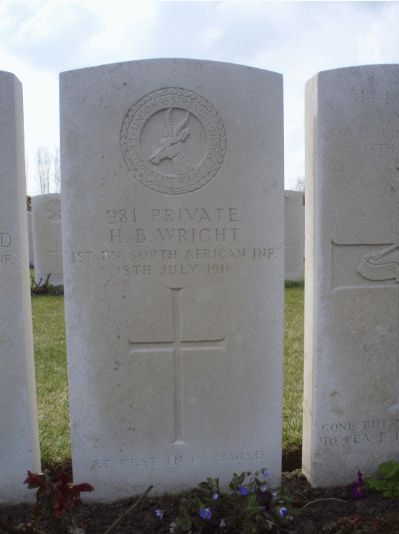
His grave stands as a sombre reminder of the many young men who left everything behind to serve their country, only to have their lives cut tragically short.
Leading Aircraftman Robert St.Cyprian Nutcombe Lovemore was born on February 8, 1919, into the prominent Lovemore family, which was well known in the Eastern Cape. He was a natural leader from a young age, serving as Junior Cadet Captain and distinguishing himself in his studies. After completing his education, Lovemore initially pursued farming, but the onset of World War II in 1939 changed the course of his life. Determined to serve, he joined the Royal Air Force Volunteer Reserve and was sent to Iraq in 1940 to complete his training as a pilot.
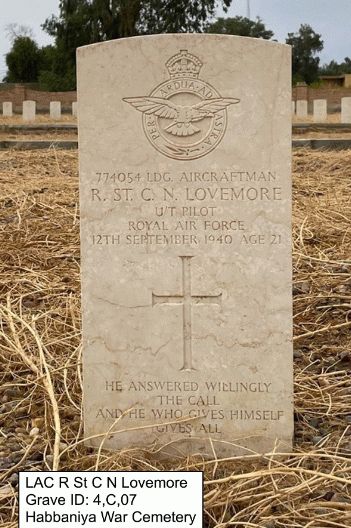
Lovemore was on the brink of a new chapter in his life, having become eligible for his wings 2 days previously. However, tragedy struck on September 12, 1940, when his aircraft, an Audax I K7523, collided mid-air with another Audax, K7517, during a training exerise at Habbaniya Aerodrome near Baghdad.
The collision proved fatal for Lovemore and marked the sudden end of a life filled with potential and promise. Lovemore’s death was a significant loss to his family and community. He was buried in the Habbaniya War Cemetery in Iraq, and a commemorative stone was placed in the Lovemore Family Cemetery in the Eastern Cape. His story is a poignant reminder of the dangers faced by those training to serve during wartime and themany young lives lost even before they could fully embark on their military careers.
Conclusion
The stories of these young men from Grey High School, who sacrificed their lives during the World Wars, offer a reminder of the human cost of global conflict. Each individual’s journey - from their early lives to their ultimate sacrifice - reflects the profound impact that war has on communities far beyond the battlefields. In examining the lives of these men, we gain more than just insight into the events that shaped their destinies. We reconnect with the very essence of historical remembrance - honouring those whose names are etched on memorials and gravestones, ensuring that their stories are not lost in history. The gentlemen of the Grey, like countless others across the world, left behind families, careers, and futures that were never realized. In commemorating their lives, we are reminded of the importance of preserving such histories, not only as a tribute to those who served but also as a means of imparting the lessons of the past to future generations. As we remember these individuals, we also acknowledge the collective memory of a community and a nation shaped by their sacrifice, ensuring that their contributions to the world's history are neither forgotten nor overlooked.
Bibliography
https://www.southafricawargraves.org/
https://www.rafcommands.com/database/
http://www.delvillewood.com/cemeteries/wright%20la%20neuville.htm
https://www.thegazette.co.uk/London/issue/30818/supplement/8984/data.pdf
McCleland, D. (2016) Port Elizabeth of Yore: Echoes of a Far-off War
Available at:
http://thecasualobserver.co.za/portelizabeth-yore-echoes-far-off-war/
About the Author
Dylan has a bachelor's degree in history and English, and a PGCE in Senior Phase and Further Education and Training for History and English. He is due to start teaching in 2025.
His first contribution to the Journal "The Austrian Castle where Nazis Lost to a US-German Coalition” was published in the December 2023 Military History Journal, Vol 20 #1.
Photographs inside the Journal are only black and white.
* Where photograph of person and grave were available only one would have been used in the hard copy of the Journal.
WORLD WAR I
11. J.A. Farish
12. L.W. Fereman [Freeman?]
13. W. Ferguson
14. J. A Forbes
15. L.H. Forbes
16. E.A. Fowlds
17. N.W. Frames
18. D.D. Gauld
19. T. Gibbon
20. E.S. Glasse
21. C.H. Gronau
22. P. Gluckmann
23. J.E. Hall
24. F.W. Herbert
25. E.W. Hill
26. H.C. Hartley
27. R.A. Heard
28. J.G. Hilson
29. H.E. Howse
30. E.A. Ingram
31. A.L. Jacobs
32. J.E. James
33. S. Jolly
34. S.C. Keates
35. H. Kohler
36. S. Lorie
37. D. MacDonald
38. S.T. John
39. B. Matthews
40. P. Myers
41. P.E. Messina
42. G.L. Mitchell
43. C.F.W. Newell
44. C.C. Newcombe
45. C.W. Rider
46. H.C. Rogers
47. R.L. Rundle
48. C.C Sissing
49. E.A. Stokes
50. E.B. Sykes
51. R. Tardugno
52. T. Taylor
53. C. Tunbridge
54. F. Turner
55. W.D Vardy
56. C.J. Walton
57. E.C. Waspe
58. E.S. Williams
59. H.B. Wright
60. A.E.W. Young
1. J.S. Aberdein
2. D.R. Abrahamson
3. R. Aldag
4. O. Allison
5. N.R.W. Anderson
6. W. Barnes
7. R.H. Basford
8. H.J. Bayley
9. H.T. Benn
10. G.D.M. Boswell
11. D.M. Brown
12. H.E. Browne
13. D. Campbell
14. L.L. Clark
15. H. Collett
16. H.S. Connell
17. E.T. Cowlin
18. W. Croft
19. G. Cruickshanks (D.F.C)
20. R.A. Currin
21. D.R. Davies
22. G.G. Dsvies
23. R.A. Dawe
24. J.G. Dawson
25. M. Day
26. J.S De C. de Kock
27. K. Diesel
28. T.R. Downed
29. D. Driver
30. L.R Dudley
31. J. Eliason
32. J.L Erasmus
33. T.P. Erlank
34. J. Farrington.
35. D.D. Fenn
36. J. Frielinghaus
37. W.B. Gillespie
38. W.D. Greaves
39. A.A. Green
40. S.G.T. Green
41. A.G. Grif®ths
42. G. Grogan
43. J.E. Grogan
44. B. Cruskin
45. E.W. Gush
46. J.M Hall
47. K. Hall
48. G.H. Halse
49. J. Harrower
50. J.N. Hefferman
51. A.R. Henry
52. C.H. Hicks
53. H. Hilton-Barber
54. O.L. Holmes
55. A.A. Jordan
56. C. Jubber
57. F.J. Kapp
58. A. Karstaedt
59. K.I.B. Keith
60. J. Kerbel
61. A.E.A. Kirk
62. N.W. Knight
63. E.L. Kruger
64. A.E. Lallyett
65. D. Lange
66. A.M. Lazarus
67. C.E. Linde
68. H.C. Lotz
69. R.St.C.N Lovemore
70. J.I. Mackintosh
71. T.D. Mainprize
72. L.L. Maltby
73. W.J. Mangold
74. W. Mitchell
75. O. Morgan
76. W.D. Morice
77. A.D.V. Morum
78. K. Muir
79. H.C. Muller
80. D.F. Nicholson
81. L.A. Odendaal
82. E.G. Owen
83. A.W. Park
84. R.D. Peters
85. P.M. Phelan
86. H.T. Pilkington
87. M.R. Porter
88. G.A. Read
89. R.P. Richardson
90. K.M. Rigg
91. A.E. Rupert
92. E. Robinson
93. L. Rosseinsky
94. T.A. Russel
95. P. Sampson
96. C.W. Siddle
97. B. Slatem
98. W.N. Spence
99. O.L. Spence
100. G.O. Stanton
101. A.F. Stuart
102. A. Stock
103. J.P. Stokes
104. R.H. Templer
105. K.M. Todd
106. M.H.L. Tweedie
107. X. Vermaak
108. J. Ward
109. C.H.D. Wardrop
110. S. Weitz
111. E.C. Welsh
112. S.E. Wentzel
113. B.D. White
114. J. White
115. E. Williams
116. J.G.H. Wilmot
117. C. Wilson
118. J.B. Womersley
119. C.R. Woods
120. L. Wright
121. A.T. Young
122. G.B. Ziervogel
1. O.J. Doyle
2. R.F. Gough
3. D.J. Meyer
Return to Journal Index OR Society's Home page
South African Military History Society / scribe@samilitaryhistory.org